

 The development of today's digital cameras are so awesome, especially the development of D-SLR (Digital Single-Lens Reflex). Since the DCS 100 camera was introduced in 1991, the D-SLR camera is enhanced by the camera manufacturer. For the category of D-SLR cameras, the principle of 'money' do not ever lie "is true. The more expensive the camera, the better is the camera.
Choosing a D-SLR camera that is right for beginner photographers, including tricky. Of the many D-SLR cameras on the market today, what we need to know when choosing the right camera for us. Here are some things to know for novice photographers before deciding to purchase a D-SLR camera.
1. D-SLR Camera Sensor
Note the CCD or CMOS sensor used in your camera. There are several variants of the digital camera's sensor, which is Full Frame (36 x 24mm), APS-H (28.7 x 19mm), APS-C (22.2 x 14.8 mm), and the Four-thirds (17, 3 x 13mm). This size difference is confusing for a beginner, but in short, if we are using a full frame sensor (ratio 3:2 image), then the image in the viewfinder will look full. If you printed on photo paper size 4 R (15 x 10 cm), then there is no cropping to fit the mold because in LCD (15: 10 = 3: 2). But if we use the APS-C sensor, there is a crop factor obtained from the division as follows, wide full frame sensor: APS-C sensor width, (36: 22.2 = 1.6) then the APS-C sensor crop factor are 1 , 6 meaning that the picture does not look completely like the fullframe sensor. The difference in appearance that occurs as shown below:

fullframe sensor = overall picture
APS-C = color picture frame
Cameras with APS-C sensor, more suitable for telephoto, because if we use the lens 70 - 300mm, that means we use a lens 112 - 480mm.
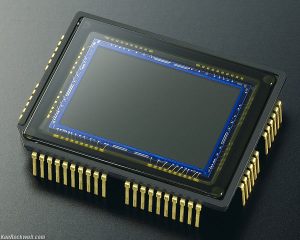
2. D-SLR cameras require special care
D-SLR cameras, has the ability interchangable lens (the lens can be redeemed off). Risk opening of the lens D-SLR camera body, allowing dust into the camera, while the D-SLR cameras are very sensitive to all the dust. Dust will stick to the camera sensor, and the images will be seen, especially when using a small aperture (diaphragm). To clean the dust, can use special dust blower is available in camera stores. Although the latest D-SLR camera equipped with automatic dust cleaning system, but still manually needed.


3. D-SLR cameras have a certain age shutter (shutter count)
If we use an analog SLR cameras, each taking the picture, we are limited by the number of frames available in rolls of film negatives that we use. In the D-SLR cameras, it is eliminated. We can photograph at a time up to hundreds or even thousands of photos, as long as have enough data storage memory. However, in D-SLR cameras are known as shutter count, which records the number of shots taken by the camera's shutter. Each D-SLR cameras, has a shutter count or estimate "lifetime" shutter. In factory testing, D-SLR camera capable of 50,000 middle-class shots. While the camera's D-SLR class can reach over 100 000 shots without a problem. Thus, the D-SLR camera is suitable for beginners to learn, as long as learning, we still have the concept of photographing, think before shooting, so do not waste ages shutter.
4. D-SLR Camera resolution (megapixels)
Digital cameras give us the option to decide how much resolution we need. Currently, the resolution capability of D-SLR cameras has reached 12 mp. The larger the camera resolution, the greater the memory required to store the images while shooting. In essence, the resolution at a size of 10 mp camera, for example, reaches a maximum resolution of 3872 x 2592. However, for regular shooting needs, resolution of it will take a great memory, therefore, the D-SLR camera always comes with a choice of max-resolution and low resolution, so we can choose according to need. Many professional photographers still use 6 mp resolution, as it still is enough to make a good photo. Great Selection of resolution is usually for the purpose of cropping the image later. In addition, the resolution is not everything. In digital cameras, the determination of the resolution is not necessarily related to the sharpness of the image. In the D-SLR camera, the sharpness of the image is more determined by the class of the lens used.
Well, that's a few things to know when we want to buy a D-SLR camera ... hopefully useful ...
